

Nest
On the speed and sound of our wings

It’s 6am and the sun has barely hit the corner of the culdesac. I am rugged up in a thick morning coat, at my outdoor desk. Soon it will be too cold to work out here. I am listening in to the morning chorus of rainforest birds, trying to isolate faint chick chick chicks of yellow–faced honeyeaters. I have given up on scanning the dense trees for any sign of movement. There is just the shapeless wind and my periphery.
They just don’t need their mother’s voices at this age.
I turn my friend’s words over in my mind.
My thumb hovers over the send button. I backspace three times.
—
For days, I watched the female honeyeater fashion twigs and bark into a cone, nestling it into a branch in the tree by the window. She was young – both maiden and mother. Filling the space with her feathers. Incubating life, until the tiniest meeps came from the hollow beneath her warm body. Each morning I stood on a small foot-stool, coffee in hand, craning my neck to see her babies, marvelling as they grew bigger, eyes squinted shut, beaks open and begging. She'd tap the branch – chick chick chick and they'd rise up like a puppet chorus.
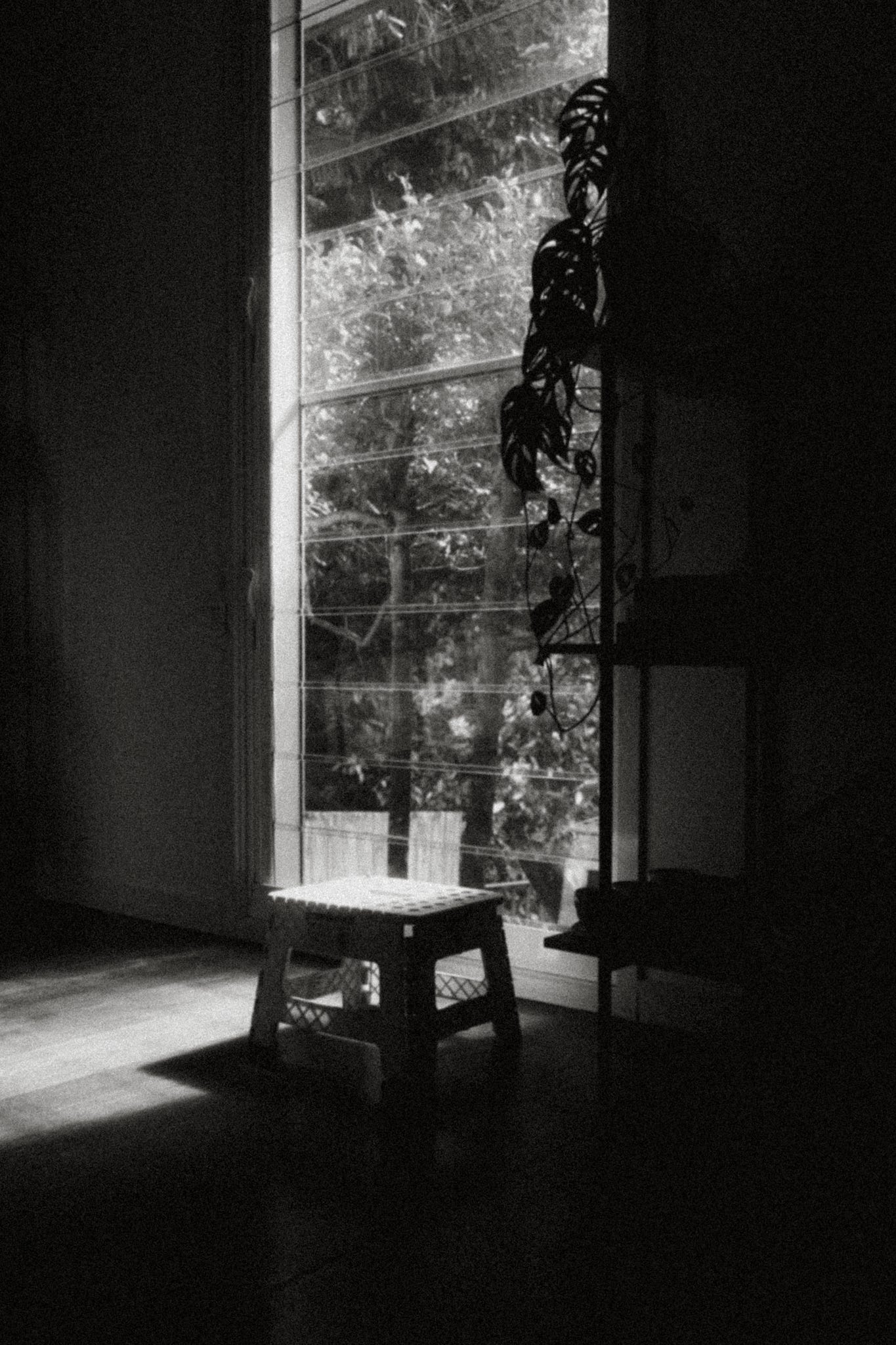
After the meal, she'd dart away again and they'd descend back into a formless pile of grey fluff. She moved tirelessly between the nest and the tall ghost gum, later shrieking and dive-bombing kookaburras and other predatory birds who seemed unbothered by her hysterics. As I worked, I heard her dart away and back again. I knew the speed and sound of her wings by heart.
—
This is how we worry. A little at first, and then all at once.
—
Before long, the babies were sitting up, black eyes round and wide, trading meeps, like a squeaky see-saw, preening in the breeze, stubby tail feathers unable to sustain any kind of flight. I placed pot-plants at the foot of the tree – shelter, a soft landing, what if, what if.
The next day, she began flying in a steady line between the tree and the forest line. Back and forth, back and forth. Chick chick chick. One by one, they popped out of the nest, like tiny feathered truffles, balancing and gripping as it bowed with their weight. Hopping madly like small feathery balls, looping around branches, swaying in the brisk breeze. When I shone a torch into the nest that night, it was empty. The wind hadn’t let up, yet they refused to return to safety, huddling somewhere in a high branch instead.
—
Fledge (verb, transitive). To raise something towards its own departure.
—
The next morning I found them teetering on the far side of the tree. Mama was flitting back and forth again, food in her beak. Then, without fanfare or ceremony, they launched themselves into the air with their newly sprung wings, landing in a nearby branch. My chest lurched.
—
Words for leaving: cease, surrender, relinquish, yield.
—
She circled her babies and they popcorned their way through the forest, disappearing. All afternoon I listened for their seesaw meeps, her chick chick chick, and their insistent squawks, but it was impossible to make them out against the patchwork of rainforest calls. Soon I won’t hear them at all, as they migrate north in the late Autumn, streaming upwards into the tablelands.
Yesterday I put away the foot-stool and closed the window. My heart has already begun to grow around the hole.
—
What to do with these markers of time. This full-spectred absence.
What to do with all this leaving.

A Certain Slant is a collection of micro-essays, occasional letters and a visual diary about the human experience, the stories we inherit and the spaces between them. If you’ve found something worthwhile in these posts and would like access to the full archive (or to simply pay it forward for a little while), US$/€ 3 a month makes a difference, and would mean a lot to me. ♡

Erica, your words are a tender, aching reminder of how love and letting go are woven together. Beautiful!
Beautiful words Erica😀